Quisque varius diam vel metus mattis, id aliquam diam rhoncus. Proin vitae magna in dui finibus malesuada et at nulla. Morbi elit ex, viverra vitae ante vel, blandit feugiat ...
History can feel difficult when it is presented only as a long list of rulers, battles, dates and dynasties.Students often read one chapter, remember it for a few days and then forget most of it. The problem is usually not the subject. The problem is the way it is studied.History becomes easier when you understand what happened, why it happened and what changed after it.Culture and archaeology also become more interesting when they are connected with the people, places and events of their time. A fort is not just a monument. A painting is not just a style. An archaeological site is not just a location on a map. Each one tells us something about the society that created it.This collection brings together books on Indian history, Rajasthan history, art and culture, forts, temples, archaeological sites, folk traditions, rulers, saints and other important subjects.Many students come here looking for a history book for competitive exam preparation. Others search for the best history book for competitive exams because they want one reliable source for their syllabus.Some students even search for a history all book list for competition, hoping to find every useful title in one place.There is no single book list that works for every student. The books you need will depend on your exam, syllabus and level of preparation.The purpose of this collection is to help you explore relevant books, understand what each title covers and select the ones that are useful for your studies.
What Are You Preparing For?
History, culture and archaeology are included in many competitive and academic examinations.You may be preparing for:
RPSC examinations
RPSC School Lecturer
RPSC 1st Grade Teacher
RPSC 2nd Grade Teacher
RPSC Assistant Professor
RPSC RAS
RAS and IAS examinations
UGC NET History
UGC NET Archaeology
SLET examinations
College Lecturer examinations
BA or MA History
Other Rajasthan government examinations
The type of book you need will depend on the exam.A student preparing for a general competitive exam may need clear and revision-friendly material. A student preparing for UGC NET, SLET or Assistant Professor may need a deeper understanding of historical sources, interpretations and developments.Before buying any history book for competitive exam preparation, check whether the book matches the level of your examination.A short general guide may be useful for quick revision, but it may not provide enough detail for a subject-based examination.
Start with Your Syllabus
One of the most common mistakes students make is buying books before reading the syllabus properly.They watch recommendation videos, follow long book lists and purchase several popular titles. Later, they discover that some books cover the same topics while other important areas are still missing.A better approach is to begin with your syllabus.Read it carefully and divide it into smaller sections.You may have topics related to:
Ancient Indian history
Medieval Indian history
Modern Indian history
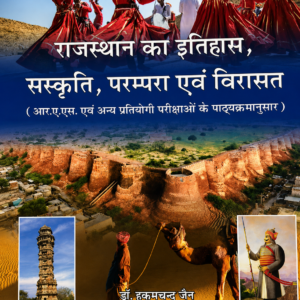
Rajasthan history
Freedom movement
Art and culture
Archaeology
Forts and monuments
Folk traditions
Saints and folk deities
Historical personalities
Inscriptions and coins
Architecture
Important archaeological sites
After dividing the syllabus, compare each topic with the contents of the available books.Students often search for the best history book for competitive exams, but the best choice is usually a combination of useful books rather than one title covering everything.For example, one book may explain Rajasthan history well, while another may be more useful for culture and archaeology.Your syllabus should decide your book list.
Ancient Indian History
Ancient Indian history introduces us to the earliest societies, kingdoms, religions, economies and artistic traditions of the Indian subcontinent.Important topics may include:
Prehistoric cultures
Indus Valley Civilisation
Vedic period
Mahajanapadas
Buddhism and Jainism
Mauryan Empire
Post-Mauryan kingdoms
Gupta period
Harshavardhana
Sangam age
Ancient trade
Education and literature
Art and architecture
Social and religious life
Students often try to memorise these periods separately. This makes the subject feel disconnected.Instead, ask simple questions:
How was society organised?
Which rulers or kingdoms were important?
What were the main economic activities?
Which religious ideas were developing?
How did art and architecture change?
What was different from the previous period?
This method helps you understand ancient history as a continuous story.When choosing a history book for competitive exam preparation, check whether it explains the connection between political, social, religious and economic developments.A book that only gives one-line facts may help with quick revision, but it may not help you understand the topic properly.
Medieval Indian History
Medieval Indian history includes political change, regional kingdoms, religious movements, trade, administration, art and architecture.Students may need to study:
Early medieval kingdoms
Delhi Sultanate
Vijayanagara Empire
Bahmani kingdoms
Mughal Empire
Rajput states
Maratha power
Bhakti movement
Sufi traditions
Medieval society
Agriculture and trade
Administration
Painting and architecture
Literature and languages
Students often remember the names of rulers and battles but ignore the wider changes taking place in society.History is not only about who ruled.It is also about how people lived, how trade developed, how religious ideas spread and how languages and artistic traditions changed.For every dynasty, make notes on:
Rise to power
Important rulers
Administration
Military campaigns
Relations with other kingdoms
Art and architecture
Social and economic developments
Causes of decline
If you are trying to create a history all book list for competition, avoid adding several books that explain the same political events. Include books that together cover politics, society, culture and administration.
Modern Indian History
Modern Indian history is an important part of most competitive examinations.It covers colonial rule, social and economic changes, reform movements and the struggle for independence.Important topics may include:
Arrival of European powers
Expansion of British rule
Colonial administration
Economic impact of British policies
Revolt of 1857
Social and religious reform movements
Formation of the Indian National Congress
Moderate and extremist phases
Gandhian movements
Revolutionary activities
Peasant and tribal movements
Constitutional developments
Role of women
Independence and Partition
Do not study movements only through dates and leaders.For every movement, understand:
What caused it?
Who took part?
What were the demands?
How did the government respond?
What was achieved?
What were its limits?
This structure helps you remember the movement and write better answers.Students searching for the best history book for competitive exams should look for a book that explains both facts and causes.Direct questions may test dates and names, but descriptive and analytical questions require a clearer understanding of the event.
Rajasthan History
Rajasthan history is one of the most important areas for students preparing for state-level examinations.It includes the history of different kingdoms, dynasties, rulers, battles, movements and the formation of modern Rajasthan.Topics may include:
Ancient sites of Rajasthan
Early kingdoms
Rajput dynasties
Mewar
Marwar
Amber and Jaipur
Bikaner
Jaisalmer
Bundi and Kota
Important rulers
Major battles
Rajput-Mughal relations
Maratha influence
British treaties
Peasant movements
Tribal movements
Freedom movement in Rajasthan
Prajamandal movements
Integration of Rajasthan
This part of history can become confusing because many kingdoms and rulers existed during the same period.A useful method is to study each region separately.For every state or dynasty, note:
Capital
Founder
Important rulers
Major battles
Administrative developments
Relations with other powers
Art and architecture
Historical contribution
After studying the regions separately, create one common timeline.A good history book for competitive exam preparation should help students connect rulers, regions and events instead of presenting them as unrelated facts.
Rajasthan Art and Culture
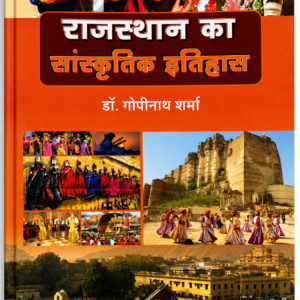
Rajasthan’s culture is shaped by its history, geography, communities and beliefs.It includes much more than festivals and colourful traditions.Students may need to study:
Folk dances
Folk music
Musical instruments
Fairs and festivals
Traditional clothing
Jewellery
Folk theatre
Puppetry
Painting styles
Handicrafts
Architecture
Languages and dialects
Literature
Folk deities
Saints
Tribal culture
Customs and traditions
Students often learn Rajasthan culture through lists.They may remember the name of a dance but forget which community performs it or on what occasion.For every cultural form, ask:
Where is it practised?
Which community is connected with it?
When is it performed?
What is its purpose?
What are its main features?
How is it practised today?
Books on Rajasthan culture can be useful for RPSC, RAS and other Rajasthan government examinations.When building your history all book list for competition, include culture books only if culture is clearly covered in your syllabus. Do not depend on a general history book to explain every cultural topic in detail.
Forts and Palaces
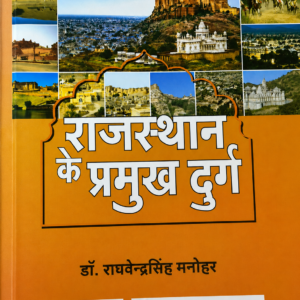
Rajasthan’s forts and palaces are important sources of political, military and architectural history.They help us understand defence, administration, royal life and regional building styles.Important forts may include:
Chittorgarh Fort
Kumbhalgarh Fort
Mehrangarh Fort
Jaisalmer Fort
Amber Fort
Ranthambore Fort
Gagron Fort
Junagarh Fort
Taragarh Fort
Do not study a fort only through its builder and location.Also understand:
Why was it built there?
Which rulers controlled it?
Which major events took place there?
How was it defended?
Which palaces, temples and water systems are inside?
What makes its architecture different?
A fort becomes easier to remember when its physical features are connected with its history.Students looking for the best history book for competitive exams should check whether the book provides enough detail on forts, monuments and architecture when these areas are part of the syllabus.
Temples and Architecture
Temples and historical buildings help us understand religion, society, sculpture and patronage.Important topics may include:
Nagara style
Dravida style
Vesara traditions
Temple plans
Shikhara
Mandapa
Garbhagriha
Sculptural decoration
Jain temples
Rajasthan temples
Stepwells
Havelis
Cenotaphs
Regional architecture
Architecture can seem difficult because of technical terms.The best way to study it is to understand the structure of the building.Look at:
Main plan
Entry
Inner space
Religious purpose
Decoration
Building material
Patron
Historical period
Regional features
Comparison is also useful.Compare temples from different regions or periods and note how the form, material and decoration changed.A good book should explain architecture in simple language instead of only listing technical terms.
Archaeology
Archaeology helps us understand the past through material remains.These remains may include:
Tools
Pottery
Buildings
Burials
Coins
Inscriptions
Sculptures
Jewellery
Everyday objects
Settlement remains
Students may need to study:
Meaning and scope of archaeology
Archaeological survey
Excavation
Stratigraphy
Dating methods
Pottery
Artefacts
Settlement patterns
Burials
Coins
Inscriptions
Conservation
Museums
Important archaeological sites
Archaeology is not simply the discovery of old objects.An object becomes important when researchers study where it was found, which layer it belonged to and what other remains were found nearby.A pottery fragment may help us understand trade, food habits, technology and settlement patterns.Students creating a history all book list for competition should not ignore archaeology if the syllabus includes ancient sites, inscriptions, coins or excavation methods.
Archaeological Sites of Rajasthan
Rajasthan has several important archaeological sites that help us understand early settlements, agriculture, trade, technology and cultural development.When studying a site, note:
Location
Period
Excavator
Main findings
Type of settlement
Tools or pottery found
Cultural importance
Connection with other sites
Do not memorise only the district and period.Ask what the discoveries tell us about the people who lived there.For example:
Did they practise agriculture?
Did they use copper?
Did they trade with other regions?
What kind of houses did they build?
Which pottery styles were found?
Was the settlement fortified?
This gives the site a clear meaning.A book that explains archaeological findings properly can be more useful than a short guide containing only place names.
Inscriptions and Coins
Inscriptions and coins are valuable sources of history.Inscriptions may give information about:
Rulers
Victories
Land grants
Religious donations
Construction work
Administration
Language
Social groups
Coins may tell us about:
Political authority
Trade
Economy
Religion
Symbols
Metals
Technology
Relations between regions
Students sometimes study inscriptions and coins only as names.Try to understand why historians use them.An inscription may describe a ruler’s achievements, but it may also exaggerate them. Historians compare it with other sources before reaching a conclusion.This basic understanding becomes important in subject-based exams.When searching for the best history book for competitive exams, check whether the book explains the use of historical sources rather than only providing isolated examples.
Folk Deities and Saints
Folk deities and saints are important parts of Rajasthan’s social and religious history.Students may need to study:
Regional folk deities
Main places of worship
Fairs
Oral traditions
Community beliefs
Social messages
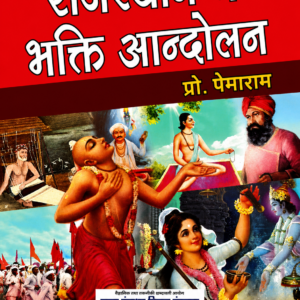
Bhakti traditions
Important saints
Literary contributions
Influence on society
Do not learn only the birthplace, temple and fair.Try to understand:
Why did people begin to follow them?
Which community is connected with them?
What message did they give?
Which social problem is linked with their story?
How are they remembered today?
Books focused on folk deities and saints can provide more useful detail than short general-knowledge notes.
Historical Personalities
History books introduce students to rulers, warriors, saints, reformers, scholars and freedom fighters.For every personality, note:
Early life
Historical background
Main achievements
Political role
Social contribution
Cultural contribution
Challenges
Historical importance
Legacy
Do not study a historical personality as a separate list of achievements.Connect the individual with the period.A ruler’s military success may depend on alliances, geography or administrative strength. A reformer’s work may be connected with the social problems of the time.This makes the personality easier to understand and remember.
How to Choose the Right History Book
Students often feel confused because many books appear to cover the same exam.Use these simple checks.
Check the Syllabus
Compare the book contents with your exact syllabus.
Check the Exam
A book for RPSC, RAS, IAS, UGC NET or SLET may differ in depth and approach.
Check the Subject
Decide whether you need general history, Rajasthan history, culture, archaeology or a particular period.
Check the Language
Choose the language in which you can understand the explanations properly.
Check the Level
A short guide may work for quick revision but may not be enough for detailed subject preparation.
Check What You Already Have
Avoid buying several books that cover the same topics in the same way.
Choose Limited Sources
It is better to complete and revise a few useful books than to collect many unfinished books.
Which Is the Best History Book?
Students frequently search for the best history book for competitive exams, but no single title is best for every student.One book may be useful for ancient history. Another may explain Rajasthan history better. A third may focus on culture and archaeology.The right book should:
Match your syllabus
Suit your exam level
Explain topics clearly
Help you prepare notes
Include important facts
Provide historical context
Support revision
Use language you understand
Instead of asking only, “Which is the best book?” ask:“Which book is best for the part of history I need to prepare?”That question usually leads to a better choice.
How Many Books Do You Need?
Students searching for a history all book list for competition often expect a long list of titles.But a long list is not always useful.The number of books you need depends on:
Your exam
Your syllabus
Your current knowledge
The depth of each paper
The time available
The books you already have
For a general competitive exam, one broad history book and one Rajasthan-focused book may be enough for the main preparation.For a subject-based examination, you may need separate books for ancient, medieval, modern, Rajasthan history, culture or archaeology.Do not copy another student’s complete book list without checking your own syllabus.A smaller, carefully selected list is easier to complete and revise.
How to Use a History Book
Buying a history book for competitive exam preparation is only the first step.You also need to study it properly.For every major event, make notes under:
Background
Causes
Main events
Important people
Result
Historical importance
For every dynasty, note:
Founder
Capital
Important rulers
Administration
Battles
Art and culture
Decline
For every cultural topic, note:
Region
Community
Occasion
Main features
Historical importance
This simple structure can make your notes much easier to revise.
How to Study History Better
History becomes easier when the facts are connected.
Follow a Timeline
Study events in order.This helps you understand what happened before and after each event.
Use Maps
Maps help you understand kingdoms, routes, battles, forts and archaeological sites.
Compare Similar Topics
Compare dynasties, movements, painting styles and temple traditions.
Connect Culture with History
Art, literature, architecture and festivals developed in a particular historical setting.
Make Short Notes
Write in your own words instead of copying complete paragraphs.
Revise Regularly
Names, dates and places can be forgotten without revision.
Solve Questions
Questions help you check whether you have understood the topic.
Questions Students Often Ask
Which history book should I start with?
Start with the section that appears first in your syllabus. For Rajasthan exams, many students begin with Rajasthan history and then move to culture and archaeology.
Which is the best history book for competitive exams?
The best history book for competitive exams is the one that matches your syllabus, exam level and language preference.
Can one book cover the complete history syllabus?
A general book may cover several periods, but detailed preparation may require separate books for Rajasthan history, culture, archaeology or specific historical periods.
Where can I find a history all book list for competition?
You can build a history all book list for competition by dividing your syllabus into ancient, medieval, modern, Rajasthan history, culture and archaeology. Select books only for the sections required in your exam.
Which history book is useful for RPSC?
Choose a book that covers the history topics listed in the syllabus of your RPSC examination. Rajasthan history and culture may require separate attention.
Are these books useful for RAS and IAS?
Books on Indian and Rajasthan history can support RAS preparation. IAS aspirants should match each book with the General Studies or optional syllabus they are following.
Can UGC NET and SLET students use these books?
Relevant subject books may support NET and SLET preparation when they match the required depth and syllabus units.
Should I use short notes or detailed books?
Use detailed books to understand the subject and short notes for revision.
How can I remember dates and rulers?
Place them on a timeline and connect each date with a ruler, event and result.
How should I prepare archaeology?
Start with basic terms and methods. Then study sites through location, period, excavation, discoveries and importance.